Pani Puri: Six Seconds of Perfect Chaos
It is the only dish in the world with a countdown timer. From the moment the puri is filled, you have six seconds. So — khaane mein kya hai?
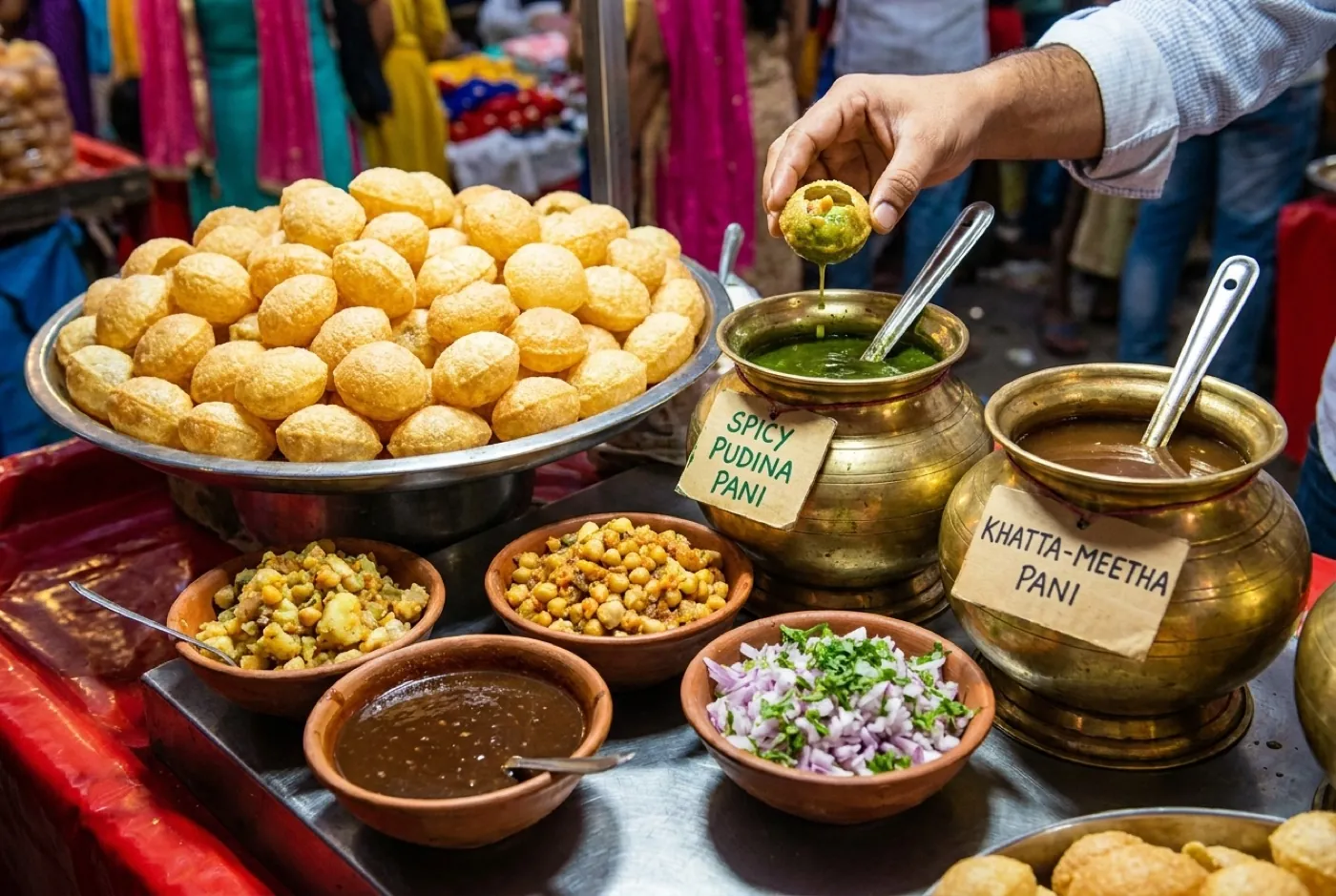
Khaane mein kya hai — the short answer
- The puri — a fried semolina sphere, hollow, thin, and engineered to shatter.
- The filling — spiced potato and chickpeas (or ragda, or sprouts, depending on your city).
- The pani — chilled mint-coriander-chilli water sharpened with black salt and tamarind; plus its sweet twin.
Watch someone eat pani puri and you are watching a countdown. Fill, hand over, and the clock starts: the liquid is already soaking through, the structure is failing, and the only correct move is the whole thing, one bite, now. This is not a flaw. It is the entire design. Pani puri is engineered to self-destruct, and that six-second deadline is why no one ever eats it slowly, sadly, or alone.
The sphere
The puri is a small miracle of physics — a disc of semolina dough that, hitting hot oil, puffs into a hollow globe with walls thin enough to shatter and strong enough to hold liquid for exactly as long as needed. Too thick and it's bread; too thin and it's a puddle. Every vendor's puri is a calibration decades in the tuning.
The waters
The teekha pani is the soul: mint, coriander, green chilli and ginger blitzed and strained into ice-cold water, seasoned with kala namak — that sulphurous black salt that makes everything taste more alive — and soured with tamarind or lemon. Its partner is the sweet khatta-meetha pani of tamarind and dates. One slaps, one soothes. The correct ratio is a personal philosophy and grounds for lifelong friendship or feud.
Pani puri is the only food with a self-destruct timer — and that deadline is the whole point.
One snack, many nations
Cross India and the same idea changes name, size and personality: Mumbai's pani puri with ragda, Delhi's golgappa with sharper spice, Kolkata's puchka — darker, tangier, potato-forward — and gupchup across the east. Everyone believes their city's version is the original. Everyone is wrong and right. That argument, conducted while standing in a circle around the vendor, is part of the recipe.
The ritual
You do not order pani puri; you enter a relationship. The vendor sets the rhythm, plate by plate, reading your heat tolerance like a doctor. And when the round ends comes the free sukha puri — the dry one, crushed with a little filling — the full stop at the end of the sentence. Refusing it is legal, but only technically.
Quick answers
What is the pani in pani puri made of?
The spicy version blends mint, coriander, green chilli, ginger, black salt and roasted cumin in chilled water, soured with tamarind or lemon. The sweet version is tamarind-date water. Most vendors serve both.
Golgappa, puchka, pani puri — what's the difference?
Same family, regional accents: pani puri (west/south), golgappa (north), puchka (east — tangier, potato-heavy), gupchup (Odisha and around). Size, filling and pani sharpness vary by city pride.