A Grandmother's Biryani
The recipe was never written down. It lived in her hands — in a pinch of saffron, a weighted lid, and the rule that you never, ever lift it too soon.
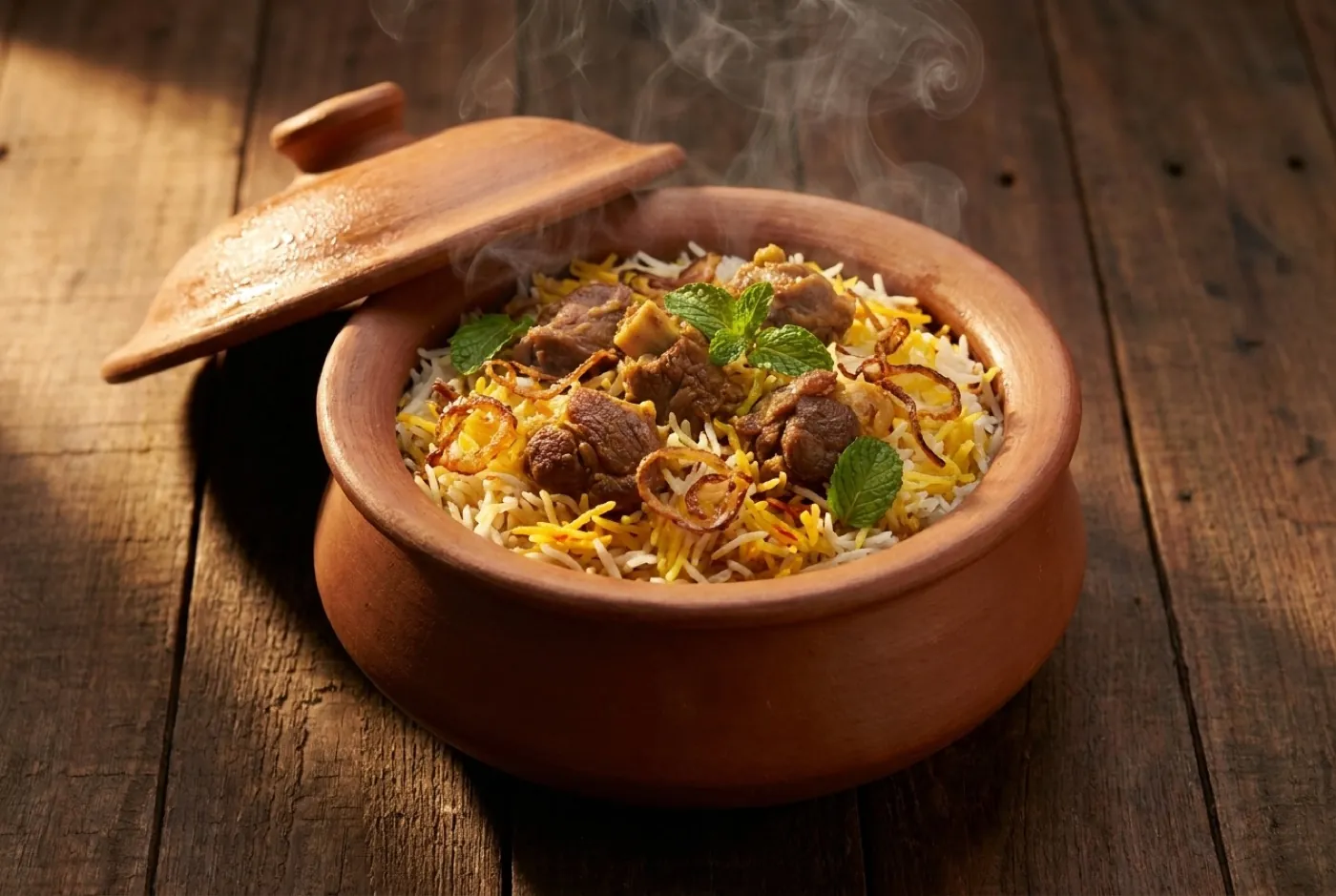
The short version
- Biryani is a layered rice dish slow-cooked on 'dum' (sealed low heat) so every flavour stays distinct.
- The magic is in the details: home-ground spices, deeply fried onions, saffron milk and patience.
- The best recipes are inherited by watching, not reading — passed hand to hand across generations.
My grandmother never measured anything. Ask her how much saffron and she would show you a pinch between two fingers, worn soft by decades of exactly this. Her biryani began the night before, with meat resting in yogurt, ginger, garlic and a fistful of spices she toasted and ground herself because, she said, the packet ones "have no smell." The rice was par-boiled with whole cardamom, cloves and a torn bay leaf, then layered — meat, rice, fried onions gone deep brown, mint, a trickle of saffron milk — and sealed under a lid weighted with a heavy stone.
The slowest, most patient cooking there is
Then came dum: the technique that separates biryani from every other rice dish. The pot sat on the lowest flame over a tawa, steam trapped inside, the whole house filling for an hour with a smell that made time slow down. Dum is not a step; it is a philosophy. It says that flavour cannot be hurried, that the meat and the rice must be given the time to become one thing without ever losing themselves. You were not allowed to lift the lid. "You'll let the soul out," she'd say, and swat your hand away from the pot.
What makes a biryani a biryani
People argue endlessly about biryani — Hyderabadi versus Lucknowi, kacchi versus pakki, the great biryani-versus-pulao debate. But underneath the regional pride, the essentials are the same: long-grained basmati cooked separately and layered (not stirred) with a richly spiced meat or vegetable base, aromatics like saffron, mint and fried onions, and that final, sacred dum. Pulao is cooked together in one pot and is lovely; biryani is assembled in layers and slow-sealed, and is an event.
She never wrote it down. She believed a recipe you can read is a recipe you can forget.
An inheritance, not a document
When she passed, we panicked — the biryani would go with her. But it hadn't. It had gone into all of us, in the years of watching, of stealing fried onions, of being handed the spoon to taste and asked "aur namak?" We make it a little differently now, each of us slightly wrong in our own way. And every single time, the moment we lift that lid and the steam rises, she is standing right there in it.
Common questions
What is the difference between biryani and pulao?
Biryani is layered — partly cooked rice and marinated meat or vegetables are assembled in layers and slow-cooked together on sealed low heat (dum), keeping flavours distinct and aromatic. Pulao is cooked together in one pot, making it lighter and more uniform.
What does "dum" mean in biryani?
Dum is a slow-cooking technique where the pot is sealed (traditionally with dough) and cooked on very low heat, trapping steam so the rice and meat finish cooking in their own aromas. It's what gives biryani its layered fragrance.
Why is saffron used in biryani?
Saffron, usually soaked in warm milk and drizzled between layers, adds a delicate aroma, a luxurious golden colour and gentle sweetness that balances the spice. Even a few strands transform the dish.